

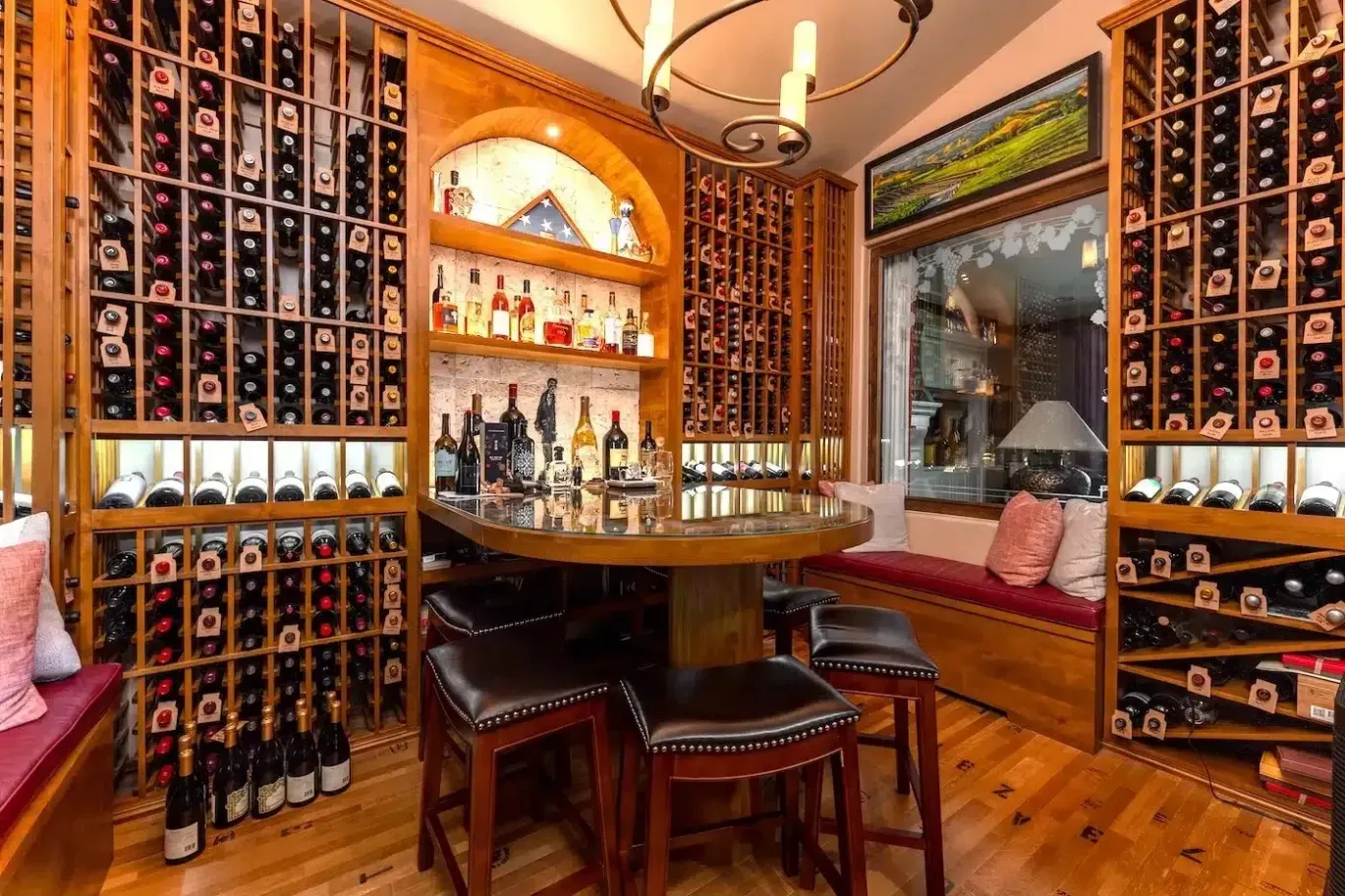
Modern cellars feel calm. They hold plenty of bottles, yet the room never seems crowded, because every material and line has a reason to be there. If you’re collecting modern wine room ideas, this guide explains how designers arrive at that restrained, gallery-like result without losing any of the practical details that keep wine safe.
Start With Restraint
Contemporary style means choosing fewer things and making them count. One or two materials, a limited color palette and uncluttered surfaces give the eye a place to rest, even when hundreds of bottles are on view, and the whole room reads as a single, deliberate gesture rather than a collection of parts. It’s a mindset more than a style.
Resist the urge to add decoration. A cellar full of bottles is already visually rich, so the surroundings should act as a quiet frame for them. When in doubt, leave something out and see whether you miss it after a few weeks, because most of the time you won’t, and the room will feel better. Space is a design element too, not a mistake.
Plan the Layout Around One Strong Idea
Strong custom wine cellar design usually revolves around a single feature, such as a floor-to-ceiling bottle wall, a tasting table or a glass-walled display. Everything else in the room supports it and stays out of its way, which gives visitors an obvious place to look the moment they step inside.
Sketch that centerpiece first, then fit storage and circulation around it. This order prevents the room from feeling like a pile of separate ideas competing for attention, and it makes later choices about materials, lighting and furniture much easier to settle, since each one only needs to answer to the main idea. Once the centerpiece is chosen, every other decision gets easier.
Materials That Feel Current
Blackened steel, pale oak, honed stone and clear glass appear again and again in contemporary rooms. They look good together because each is simple and honest about what it is, with no heavy ornament to explain, and they age gracefully without demanding constant polishing or careful attention. Honest materials rarely go out of style.
Texture adds depth without color. A rough stone wall behind smooth metal racking gives the eye variety, and it keeps a minimal room from feeling flat or cold. Mix a couple of finishes, but resist adding more, because a third or fourth material quickly pulls the room back toward looking busy and accidental. Samples held under the actual lighting save many costly regrets.
Light as a Design Tool
Modern rooms often hide their light sources. Linear LEDs recessed into shelving or ceilings wash surfaces softly, leaving the fixtures themselves almost invisible while labels and glass pick up a gentle, even glow that makes the whole room feel calmer and more expensive than it really is.
Tunable white systems let you shift between a bright working mood and a dim, intimate one. Keep brightness low near the bottles, since the aim is a glow, not a spotlight, and gentle contrast makes the whole room feel richer, deeper and noticeably more inviting for an unhurried evening of tasting. Dimmers installed early are cheap, but retrofitting them later is not.
Keep the Function Invisible
Cooling equipment, wiring and monitors shouldn’t spoil the look. Ducted systems can vent into a nearby closet, and sensors can tuck away behind panels, so nothing technical interrupts the clean surfaces of the room, yet the climate stays exactly where the wine needs it to be.
Handles and hardware deserve the same care. Slim pulls or push-to-open fittings keep surfaces smooth. The best modern cellar hides all the effort that keeps it running, so the room just seems to work without anyone noticing how, which is a sign that the planning behind it was done properly. Hidden doesn’t mean unreachable, so service access still matters.
Final Thoughts
A modern cellar succeeds when beauty and performance support each other. To see how those ideas could work in your own home, visit customwinecellar.com and start the conversation about what your space could become, from the first sketch through to the last quiet adjustment of the lighting.
Simple rooms are often the hardest to build well, because nothing hides mistakes. That’s exactly why careful craft matters so much, and why a restrained cellar can feel more impressive than a busy one, even when it holds far fewer bottles and uses fewer materials overall. Careful detail work separates a good cellar from a forgettable one.