

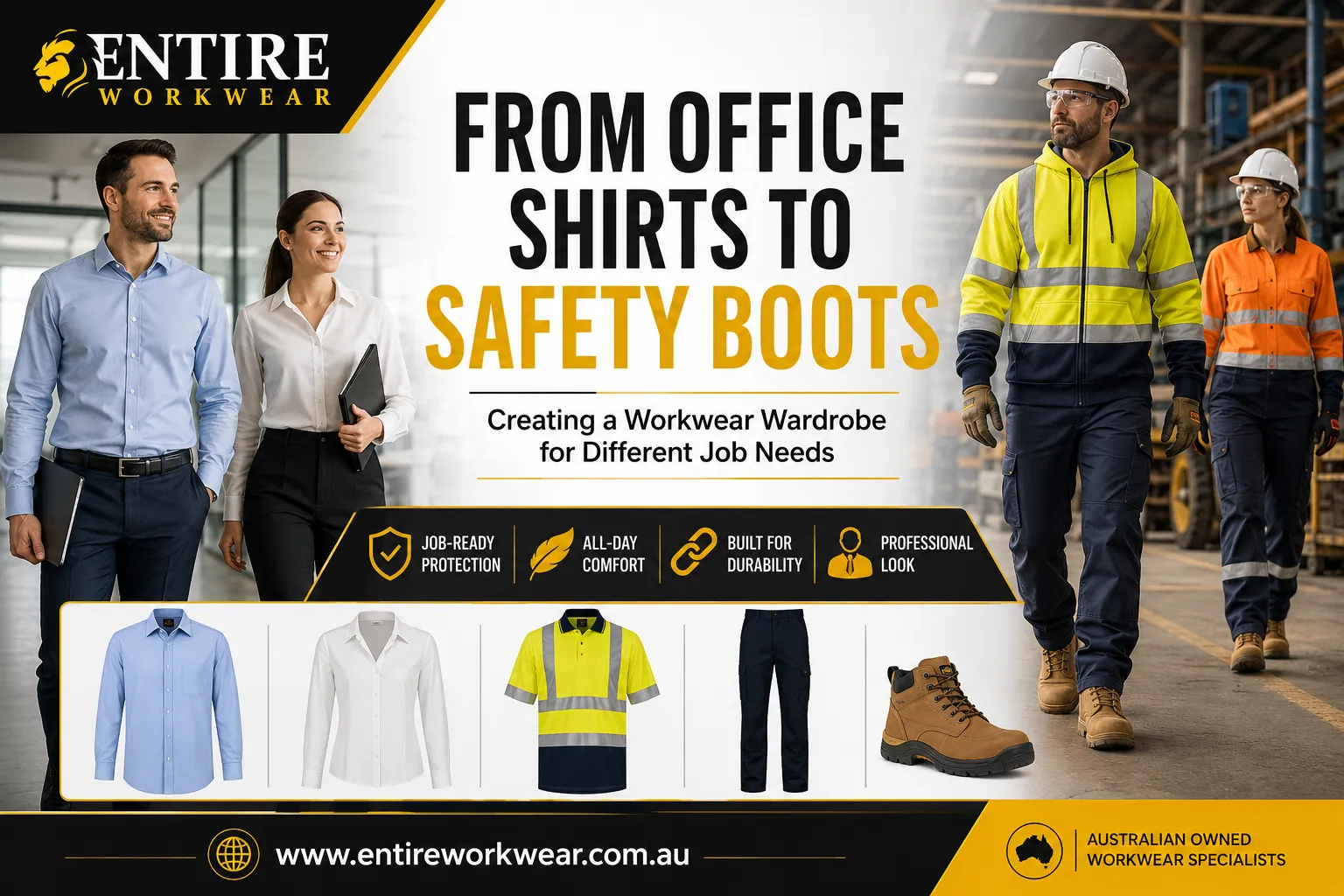
Many workplaces do not fit neatly into one clothing category. An employee may spend part of the day speaking with customers, another part walking through a warehouse and occasionally visit operational areas where specific footwear or visibility requirements apply.
That is why a useful work wardrobe starts with roles rather than fashion categories. For customer-facing duties, workwear blouses can create a professional foundation, but that may be only one component of the employee’s clothing needs.
Map Clothing to Daily Tasks
List what the person actually does during a shift.
Does the role involve:
-
Customer meetings?
-
Desk work?
-
Warehouse access?
-
Driving?
-
Outdoor tasks?
-
Manual handling?
-
Machinery areas?
-
Site visits?
A single employee may require different clothing combinations for several of these activities.
Corporate Garments Still Need Practical Fit
Office clothing is often selected primarily for appearance, but fit remains important.
Workwear blouses should allow natural arm and shoulder movement, especially for employees who alternate between computer work, stock handling and customer service.
Choose Garments That Coordinate Easily
A small corporate wardrobe becomes more useful when shirts and blouses work with several trouser options.
Consider:
-
Neutral base colours
-
Easy-care fabrics
-
Appropriate sleeve lengths
-
Layering under a jacket or knit
-
A cut that remains comfortable while sitting and moving
This gives staff more flexibility without requiring a very large uniform collection.
Visibility Requirements Need a Separate Assessment
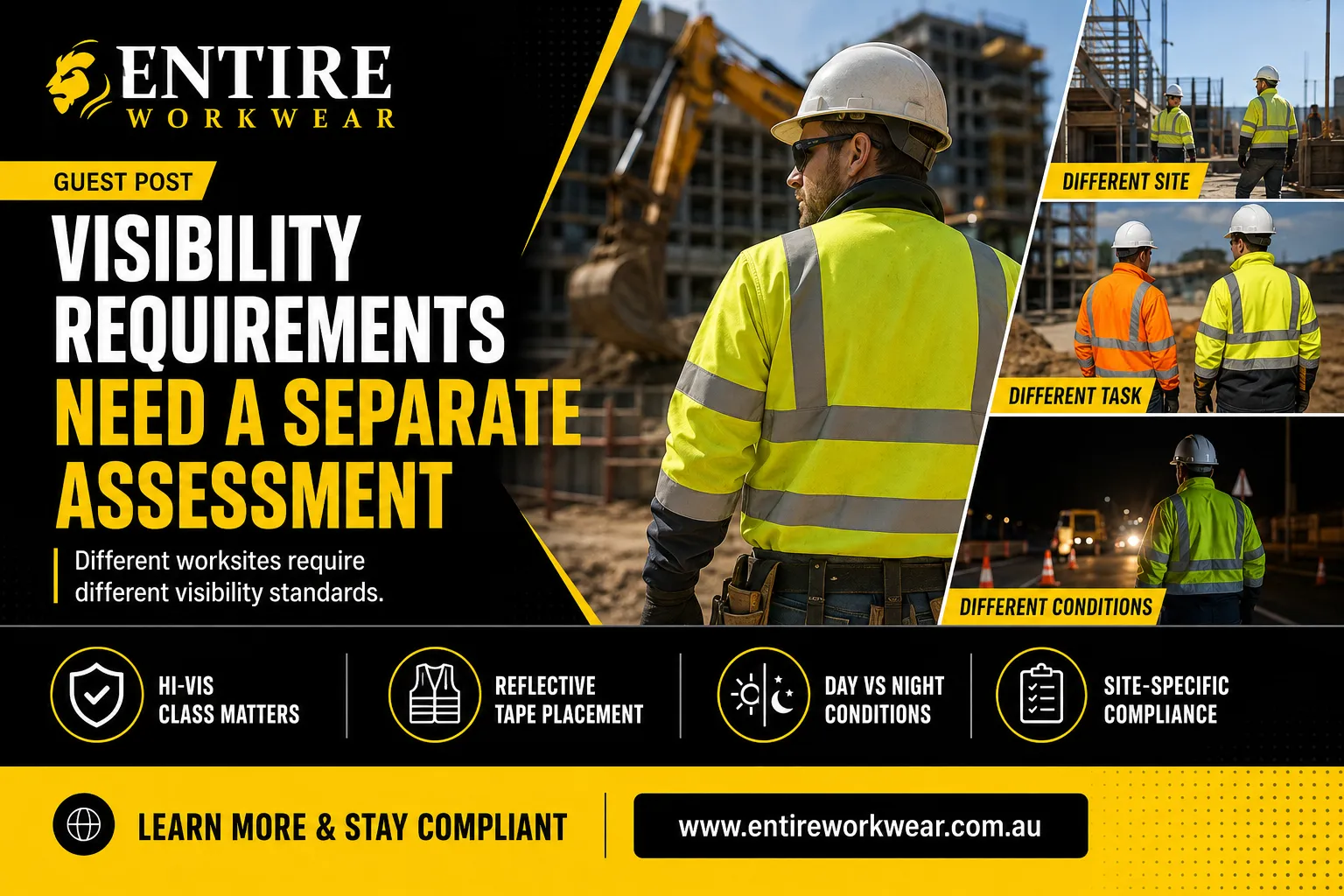
Some environments require employees to be more visible around vehicles, equipment or operational areas.
A product such as reflective tape for clothing may have particular garment or customisation applications, but workers should not assume that simply adding tape automatically makes ordinary clothing compliant with a workplace requirement.
Compliance Is About the Complete Garment
Where high-visibility or reflective workwear is required, refer to:
-
Employer requirements
-
Site procedures
-
Garment specifications
-
Relevant standards
-
Intended lighting conditions
-
Correct placement and configuration
Reflective tape for clothing should be used according to its intended application and any requirements relevant to the garment.
Do Not Improvise With Safety-Critical Clothing
If a site specifies particular certified or compliant workwear, purchase garments designed for that requirement rather than attempting an unverified DIY modification.
Footwear Should Match the Ground You Work On
Footwear connects the worker to the work surface for most of the shift.
People searching for work boots perth should think beyond size and appearance.
Important factors may include:
-
Required toe protection
-
Sole characteristics
-
Closure style
-
Ankle support preferences
-
Indoor or outdoor use
-
Typical walking distance
-
Exposure to wet conditions
-
Workplace rules
Not every boot is designed for every hazard, so individual product specifications matter.
Build Separate Outfit Levels
A useful way to organise workwear is to create several “levels” based on duties.
Level 1: Office and Customer-Facing Duties
This could include workwear blouses, corporate shirts, appropriate trousers and office-suitable footwear.
Level 2: Mixed Office and Operational Duties
Employees may need practical pants, more durable tops and footwear suitable for occasional warehouse or site access.
Level 3: Operational or Site Duties
The clothing should be selected around the site’s actual PPE, visibility and footwear requirements.
This system prevents employees from expecting one outfit to perform every job.
Keep Transitional Items Available
If staff regularly move between environments, changing one or two items may be easier than maintaining completely separate uniforms.
Depending on workplace rules, this could mean keeping approved high-visibility outerwear, suitable boots or other required equipment accessible.
Work boots perth buyers who work between office and site environments may also prefer a solution that balances job requirements with reasonable all-day comfort.
Think About Branding Separately From Safety
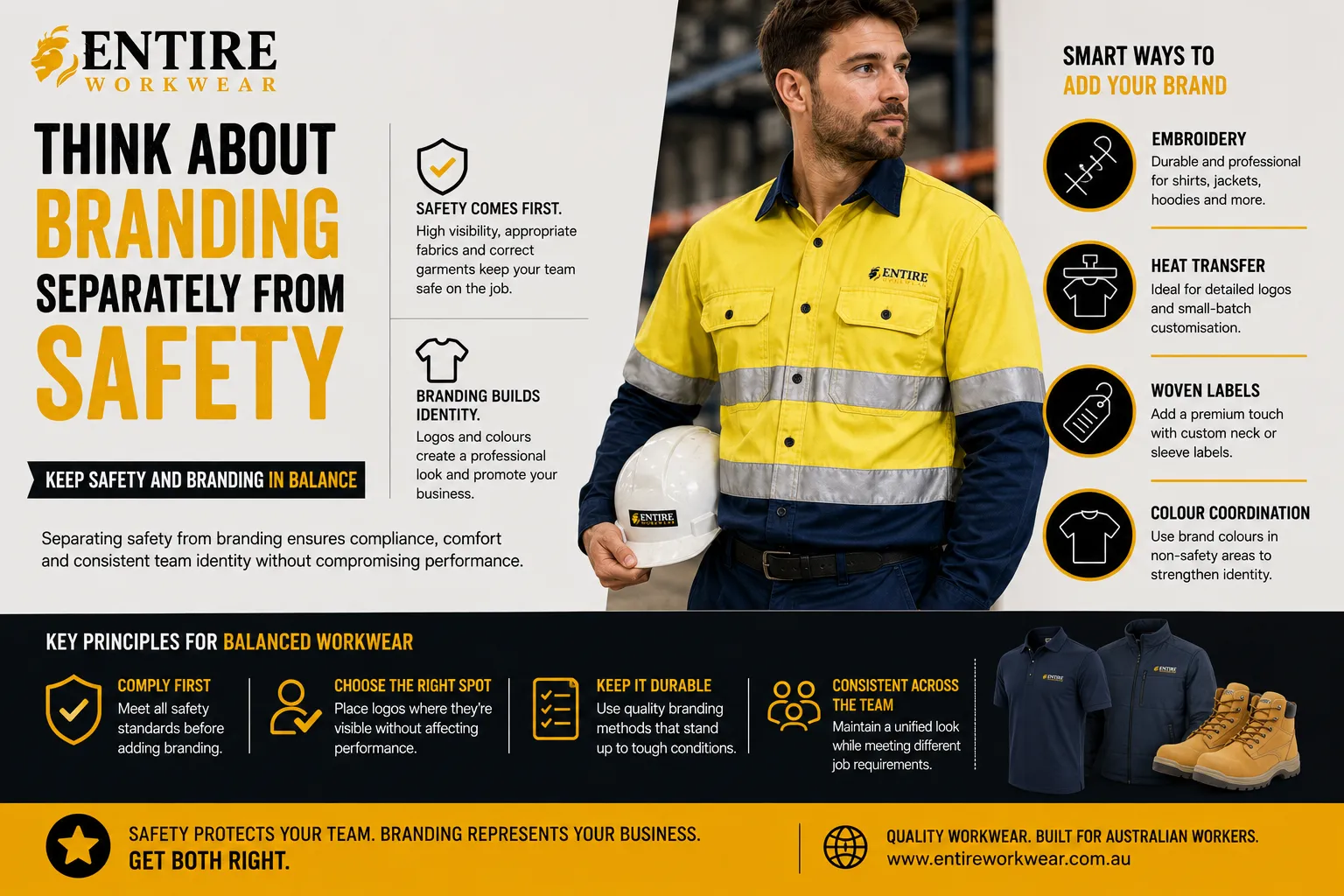
Businesses often want uniforms to have a consistent appearance.
That can be achieved through colour, embroidery, garment selection and coordinated styles. However, branding should never interfere with mandatory safety features.
If reflective tape for clothing or other visibility elements form part of a compliant design, customisation should preserve the required configuration.
Why Choose Us
Entire Workwear provides corporate women’s tops and blouses alongside reflective clothing tape and a dedicated work-boots range.
This breadth can help businesses consider customer-facing clothing, job-specific accessories and footwear as parts of the same uniform strategy.
About Us
Entire Workwear supplies clothing across corporate, general workwear, high-visibility and footwear categories.
Rather than expecting one garment to satisfy every job requirement, buyers can compare pieces according to the specific environment in which they will be used.
Conclusion
A good work wardrobe reflects the real variety of an employee’s day.
Start with professional clothing for customer-facing duties, then identify separate visibility, durability and footwear requirements for operational areas. Doing so creates a wardrobe that looks appropriate where presentation matters while remaining practical when the job moves beyond the office.