
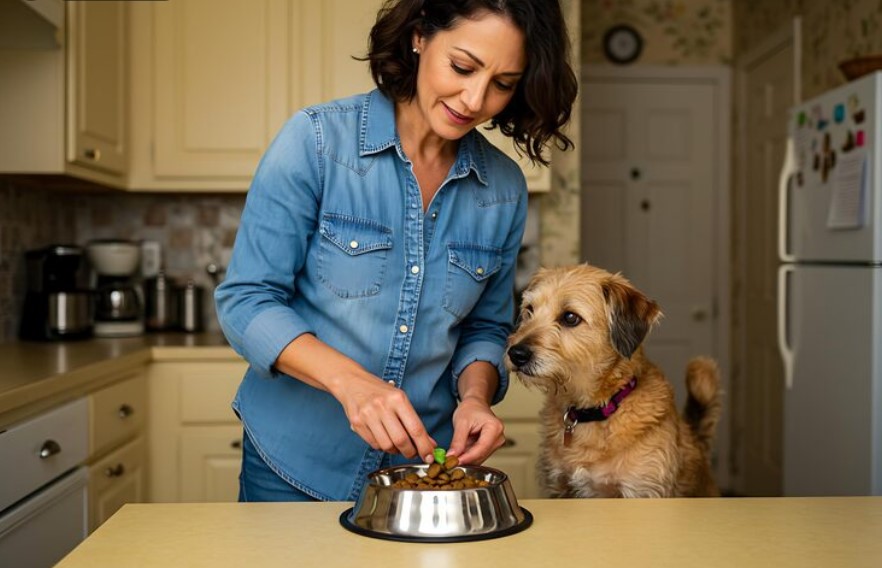

The right dog feeders can make meals safer, cleaner, and easier to manage. A suitable feeder should match your dog’s size, eating speed, face shape, mobility, food type, and daily routine.
Some dogs eat calmly from a basic bowl. Others gulp food, push it across the floor, struggle with deep dishes, or need timed portions. The goal is not to buy the most complicated product. It is to solve the eating problem your dog actually has.
Why the Right Dog Feeder Matters
A feeder’s shape, depth, stability, and design can affect how quickly and comfortably a dog eats.
Dogs that rush meals may regurgitate, vomit, swallow excess air, or inhale food. Slow-feeding and interactive products make dogs work around ridges, compartments, or moving parts. Veterinary guidance also suggests smaller, more frequent meals and using part of the meal during training for dogs that eat too fast.
Watch one full meal before buying anything. Look for gulping, coughing, spilling, frustration, awkward posture, or trouble picking up the last pieces. Those observations will point you toward the right design.
Main Types of Dog Feeders
Standard Dog Bowls
A simple bowl works well for many healthy dogs. Choose one with a wide, stable base so it does not slide or tip.
Stainless steel is a practical everyday option because it is durable and easy to wash. Ceramic can also work, but replace chipped or cracked bowls. Deep dishes may suit long-nosed dogs, while wide, shallow bowls can be easier for flat-faced breeds and puppies.
The bowl should hold the full meal without overflowing, but it should not be so deep that your dog struggles to reach the bottom.
Slow Dog Feeders
Slow dog feeders contain raised patterns, channels, or separate sections. These obstacles limit large mouthfuls and may extend mealtime.
They can help dogs that finish meals within seconds, cough while eating, regurgitate after meals, or become highly excited around food. VCA notes that fast eating can contribute to regurgitation, vomiting, bloat, and aspiration. Slow-feed bowls are one way to reduce gulping.
Choose a pattern that slows your dog without making food impossible to reach. Wide channels suit broad muzzles, while small dogs need shallower sections. The feeder should also be easy to clean.
Start with a simple pattern. Move to a harder design only when your dog still eats too quickly.
Interactive and Puzzle Feeders
Interactive feeders turn a meal into a problem-solving activity. A dog may roll a ball, slide a panel, lift a flap, or search through a snuffle mat to release food.
These products can slow eating while adding mental activity. VCA describes puzzle feeders and snuffle mats as ways to encourage foraging, provide stimulation, and distribute food gradually.
They may suit bored indoor dogs, puppies, controlled portions, or dogs that eat dry food too quickly. Begin with an easy product and supervise the first sessions, especially if your dog chews plastic, rubber, or fabric.
Use part of the regular meal rather than adding extra treats.
Automatic Dog Feeders
Automatic feeders release food at programmed times. They can help with early meals, several small meals, consistent schedules, and measured dry-food portions.
Check whether the machine can handle your dog’s kibble size. Large or irregular pieces may jam. Test several portions before relying on the setting.
An automatic feeder does not replace daily observation. Confirm that your dog ate, check for blockages, clean food-contact parts, and monitor appetite. A sudden refusal to eat can signal illness.
Look for a locking lid and battery backup if your dog opens containers or your home has power cuts.
Elevated Dog Feeders
Raised feeders are often marketed for large or older dogs, but elevation is not a universal benefit. A prospective study of 1,637 large and giant-breed dogs found that raised bowls were associated with increased gastric dilatation-volvulus risk in the population studied.
Do not raise a healthy dog’s bowl simply because the dog is large. Discuss it with your veterinarian, especially for deep-chested breeds or dogs with a family history of bloat.
Elevated or upright feeding can be medically useful for dogs with megaesophagus or certain swallowing disorders. In these cases, gravity may help food reach the stomach, and the dog may need to remain upright after eating. Follow a veterinarian’s specific plan.
Match the Feeder to Your Dog
Fast Eaters
Start with a simple slow feeder. Time a meal before and after the change. You can also divide food between two feeders, use a puzzle toy, or offer smaller meals more often.
Flat-Faced Dogs
Pugs, Bulldogs, and similar dogs may find deep bowls awkward. A wide, shallow, slightly tilted dish can make food easier to reach. Avoid narrow mazes that trap food beyond the muzzle.
Long-Eared Dogs
Spaniels may benefit from a bowl with a narrower opening that keeps their ears outside the food. A non-slip base prevents the bowl from moving.
Puppies
Choose a low, stable feeder with smooth edges. Puppies may chew lightweight bowls, so supervise them and remove the feeder after meals. A basic slow feeder can help a puppy that gulps, but it should not be frustrating.
Senior Dogs
Older dogs may need a shallow, non-slip bowl that is easy to approach. However, sudden hesitation at meals can point to dental pain, nausea, weakness, or swallowing trouble.
Contact your veterinarian if your dog starts dropping food, coughing, or losing interest in meals.
Multi-Dog Homes
Feed dogs separately when one steals food or creates pressure around meals. Separate feeding also lets you track each dog’s intake.
Do not use a slow feeder as the only solution for food guarding. Aggression around meals may require help from a qualified behavior professional.
Safety and Cleaning Checklist
The best dog feeders should be stable, food-safe, smooth, and easy to clean. Avoid sharp edges, loose parts, peeling coatings, deep scratches, and cracks that trap food.
The FDA recommends washing food bowls and measuring tools with soap and hot water after each use. Leftover wet food should be refrigerated promptly or discarded, and water bowls should be washed regularly.
Use these habits:
-
Wash the feeder after wet meals.
-
Remove old dry-food crumbs instead of topping them up.
-
Dry all parts before refilling.
-
Check puzzle feeders for trapped food.
-
Replace damaged bowls and chewed pieces.
-
Keep a separate scoop for pet food.
Common Dog Feeder Buying Mistakes
Choosing by appearance alone
A stylish feeder is not useful if your dog cannot reach the food comfortably. Check the bowl’s depth, width, stability, and pattern before buying.
Selecting an overly difficult puzzle
Start with a simple puzzle feeder. When the dog cannot access the meal, mental enrichment becomes frustration.
Make the activity easier if your dog begins barking, biting the feeder, walking away, or looking to you for help.
Not testing an automatic feeder
Do not assume the programmed portion matches the amount shown on the screen. Dispense several test servings and measure them before relying on the machine.
Check the feeder daily for jams, low batteries, or damaged parts.
Ignoring feeder hygiene
Old food, moisture, and saliva can collect inside grooves and moving sections. Choose a feeder that comes apart easily and can be cleaned thoroughly.
Using a raised feeder without advice
Do not change bowl height as a home treatment for coughing, regurgitation, neck pain, or swallowing trouble. These symptoms may point to a medical problem that needs proper diagnosis.
Choose the Feeder That Solves the Problem
To choose among dog feeders, first identify your dog’s eating style. A stable standard bowl suits many dogs. A slow feeder may help a gulper. A puzzle feeder can add mental activity, while an automatic feeder can support scheduled portions.
Buy the simplest feeder that addresses the issue. Confirm that your dog can reach every bite without stress and that you can thoroughly clean the product.
Watch how your dog eats during the first few uses. If the feeder creates frustration, coughing, or difficulty reaching food, try a simpler design.
When eating behavior changes suddenly, or your dog coughs, regurgitates, drops food, or appears in pain during meals, stop experimenting with bowls and contact your veterinarian.
Frequently Asked Questions
Are slow dog feeders good for every dog?
No. They are most useful for fast eaters. Calm dogs may not need one, and dogs with dental or facial limitations may struggle with complex patterns.
How long should a dog take to finish a meal?
There is no exact time that suits every dog. Focus on calm eating without gulping, coughing, vomiting, or frustration.
A feeder that changes a 20-second meal into several controlled minutes may be useful. However, making a dog work for an excessive amount of time is unnecessary.
Are elevated feeders better for large dogs?
Not automatically. Research has linked raised bowls with increased bloat risk in some large and giant dogs. Use elevation only when your veterinarian identifies a specific benefit.
Can wet food go in a slow feeder?
Yes, when the product is designed for wet food and can be cleaned fully. Shallow mats and wide-groove bowls are often easier to wash than deep mazes.
Remove leftover wet food promptly rather than leaving it at room temperature.
How often should a feeder be replaced?
Replace it when it develops cracks, chips, sharp edges, deep scratches, peeling material, loose parts, or damage that makes complete cleaning difficult.