
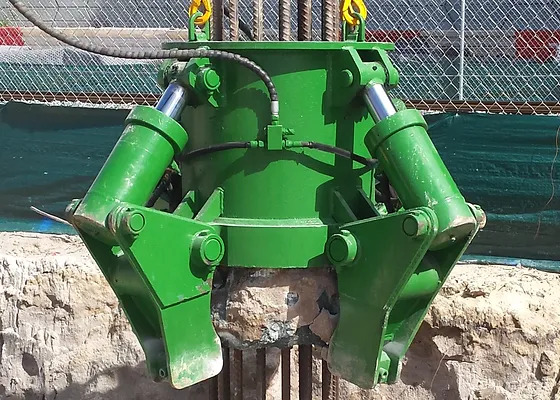

When you are building big foundations, the pile-breaking stage is often the one that slows down the whole progress schedule. You start with these tall, rough concrete columns that need to be trimmed back to a very specific height for the slab. Doing this by hand is honestly just terrible work for the crew, especially when you have dozens or hundreds of them to finish.
Keep the steel straight
The main goal during Pile breaking is to remove the extra concrete while leaving the steel bars perfectly vertical and clean. If you use a heavy hammer that vibrates too much, you end up splitting the concrete deep into the column, where you really do not want that to happen. You need a tool that applies pressure sideways to snap the concrete off at the right level. This keeps the core solid and prevents you from having to spend hours fixing cracked concrete before starting.
Safety and site health
Vibration syndrome is a really nasty thing that happens to workers who spend their whole lives holding onto shaking tools. By automating the pile-breaking workflow with excavator attachments, you take that physical burden off your people completely. The operator sits safely in the cab and uses a joystick to control the cutting heads with great precision. It keeps the workspace much cleaner and reduces the risk of serious accidents that usually happen when people are working way too close to heavy, dangerous machinery.
Saving your project time
Every single hour counts when you are trying to pour the next foundation slab before the weather changes on you. A standard pile-breaking process using modern milling heads works about four times faster than the old-school manual methods that people used years ago. You finish your piles in half the time and save a lot of cash on equipment rental fees as well. It is a smart move for any site manager who needs to keep the daily schedule moving fast and very predictably.
Handling the leftover rubble
You have to deal with all that broken concrete after you finish the cutting part of the foundation job. It is a pain to haul it all away if you just let it sit in a giant pile across the site. Using a system that breaks the material into smaller, manageable chunks makes the cleanup much faster for your labourers. You can even crush the pieces to use for temporary access roads around the pit, which saves you even more money on bringing in fresh gravel.
Site planning and prep
Before you start the actual pile-breaking work, you need to mark the exact cut-off levels on every single column across the area. A slight error here can lead to a huge amount of rework, which is something nobody on the team wants to deal with. Walk the site with your lead engineer and double-check all your measurements against the original plans before the machinery starts moving. Being thorough at the beginning of the week saves you from massive headaches during the final construction phase.
Conclusion
Getting your foundation work done right is essential for the long-term strength of any building project you manage. You can see how modern equipment handles these tasks by checking out Brextor.com for more technical details and helpful tips. Planning for efficiency and focusing on the safety of your field team will always produce the best results for your development site. If you have questions about specific pile diameters or need a consultation on your next project, feel free to contact a professional team member to discuss your needs so we can help you get started successfully today.