
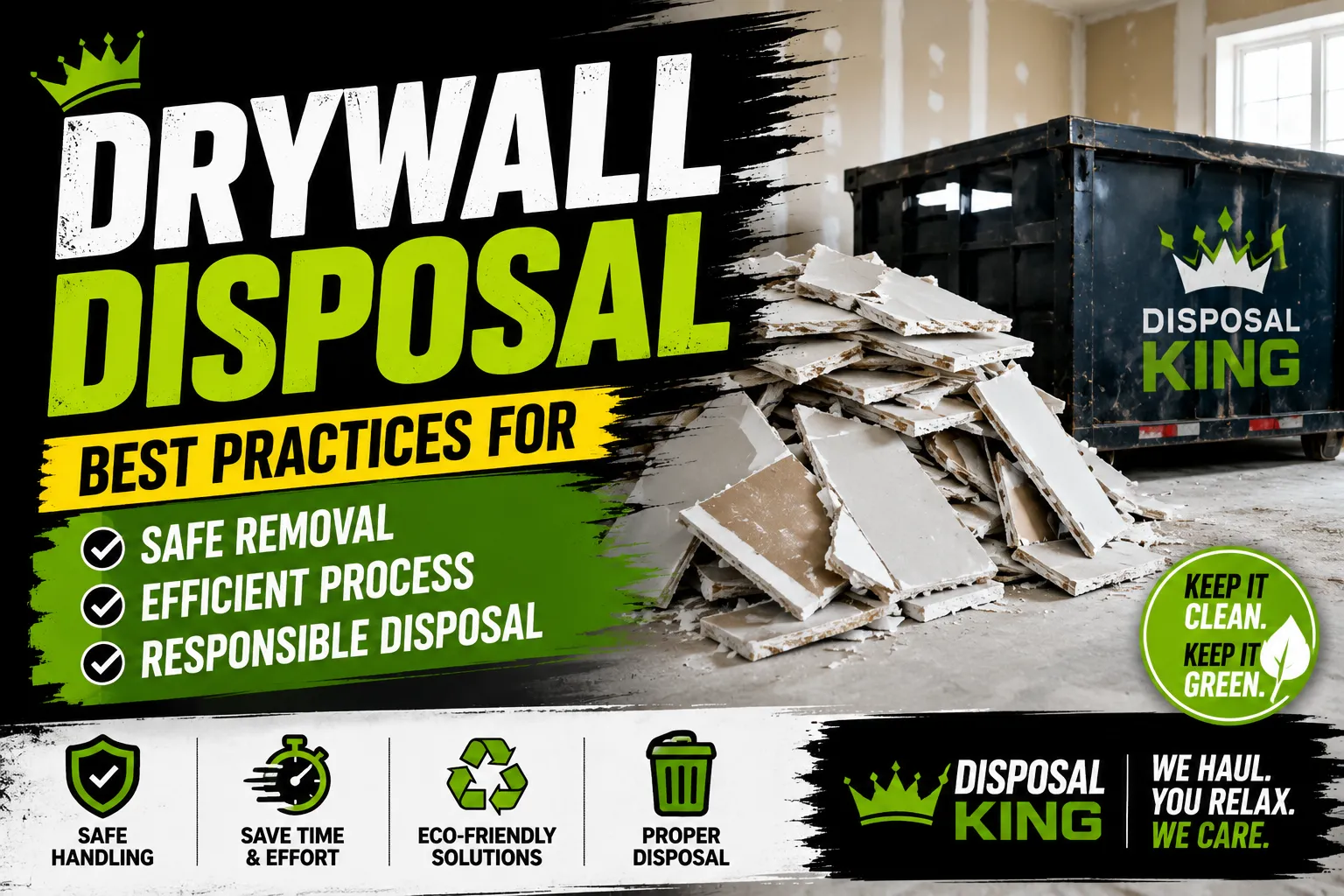

Whether you’re remodeling a single room or completing a large construction project, drywall disposal is an important part of maintaining a safe, organized, and environmentally responsible worksite. Because drywall contains gypsum—a material that can often be recycled—proper disposal helps reduce landfill waste while ensuring compliance with local waste management regulations.
Understanding how to handle drywall waste can save time, reduce disposal costs, and help keep your renovation project on schedule.
Why Proper Drywall Disposal Matters
Drywall is one of the most common construction materials used in residential and commercial buildings. During renovations or demolition, large amounts of drywall waste can accumulate quickly.
Improper disposal may:
- Increase landfill waste
- Reduce recycling opportunities
- Lead to contamination of recyclable materials
- Create unnecessary cleanup and transportation costs
By separating drywall from other construction debris and using an appropriate disposal service, homeowners and contractors can improve recycling rates and simplify waste management.
Can Drywall Be Recycled?
Yes. In many areas, clean drywall can be recycled rather than sent directly to a landfill.
Recycled gypsum may be processed for use in:
- New drywall manufacturing
- Soil and agricultural applications (where permitted)
- Industrial products
To maximize recycling opportunities, drywall should be kept free from contaminants such as household garbage, insulation, plastics, or hazardous materials.
Older Drywall May Require Additional Precautions
When working on older buildings, it’s important to determine the approximate age of the drywall before demolition.
In British Columbia, drywall installed before 1990 may contain asbestos in joint compounds or related materials. If asbestos is suspected, testing by a qualified professional should be completed before removal or disposal. Handling asbestos-containing materials requires specialized procedures and must comply with applicable regulations.
If you’re uncertain about the age or composition of drywall, consult a qualified asbestos professional before beginning demolition.
Best Practices for Drywall Disposal
Following a few simple practices can make disposal easier and more efficient.
Separate Drywall from Other Debris
Keep drywall in a dedicated pile or disposal bin whenever possible. Mixing it with wood, metal, roofing materials, or household waste can reduce recycling opportunities and may increase disposal costs.
Choose the Right Bin Size
Selecting an appropriately sized dumpster helps prevent overloading and keeps the project organized. Smaller renovations may only require a compact bin, while whole-home remodels often generate enough debris to justify a larger container.
Keep the Material Dry
Drywall that has been heavily contaminated with water, mold, or other materials may not be suitable for recycling. Protecting drywall waste from excessive moisture can improve recycling potential.
Follow Local Disposal Requirements
Municipal and regional regulations vary. Confirm local requirements for drywall disposal, accepted materials, and any documentation needed for older drywall before transporting waste.
Benefits of Professional Drywall Disposal Services
Hiring a professional disposal company offers several advantages:
- Convenient delivery and pickup of disposal bins
- Proper transportation to approved recycling or disposal facilities
- Guidance on accepted materials
- Assistance with selecting the right container size
- Reduced time spent making multiple disposal trips
For contractors and homeowners managing larger projects, professional services help streamline cleanup while supporting responsible waste management.
Tips for an Efficient Cleanup
To improve efficiency during your project:
- Plan for waste disposal before demolition begins.
- Separate recyclable materials from general construction debris.
- Avoid placing hazardous materials in drywall bins.
- Load bins evenly and stay within weight limits.
- Schedule pickup promptly when the project is complete.
These simple steps can help keep your worksite safer and reduce unnecessary delays.
Frequently Asked Questions
Can drywall go in regular household garbage?
Small amounts may be accepted through local waste programs in some areas, but larger quantities from renovations typically require specialized disposal or recycling. Always check your local regulations.
Is drywall recyclable?
In many regions, clean gypsum drywall can be recycled into new products or used in approved industrial or agricultural applications.
Why should drywall be separated from other construction waste?
Separating drywall improves recycling opportunities, reduces contamination, and may lower disposal costs.
Does older drywall require asbestos testing?
Older drywall and associated joint compounds may contain asbestos depending on the building’s age and materials used. If asbestos is suspected, testing by a qualified professional is recommended before removal or disposal.
Conclusion
Proper drywall disposal is an essential part of any renovation or demolition project. By separating drywall from other debris, following local disposal requirements, considering recycling opportunities, and taking appropriate precautions with older materials, homeowners and contractors can complete projects more efficiently while supporting responsible waste management and environmental sustainability.